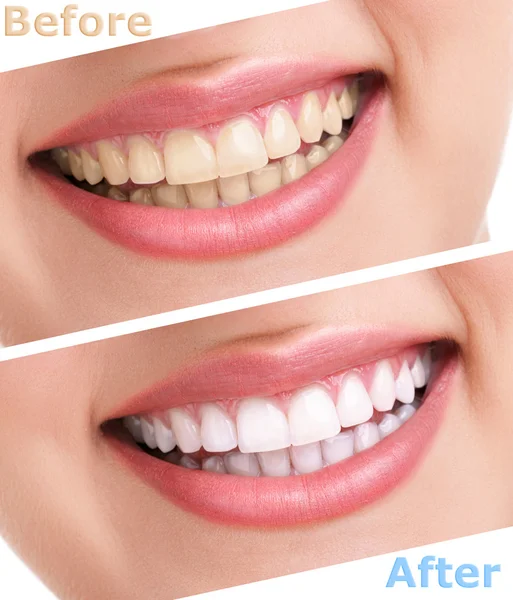
Teeth Whitening is a cosmetic dental procedure that lightens pigmentation within the teeth
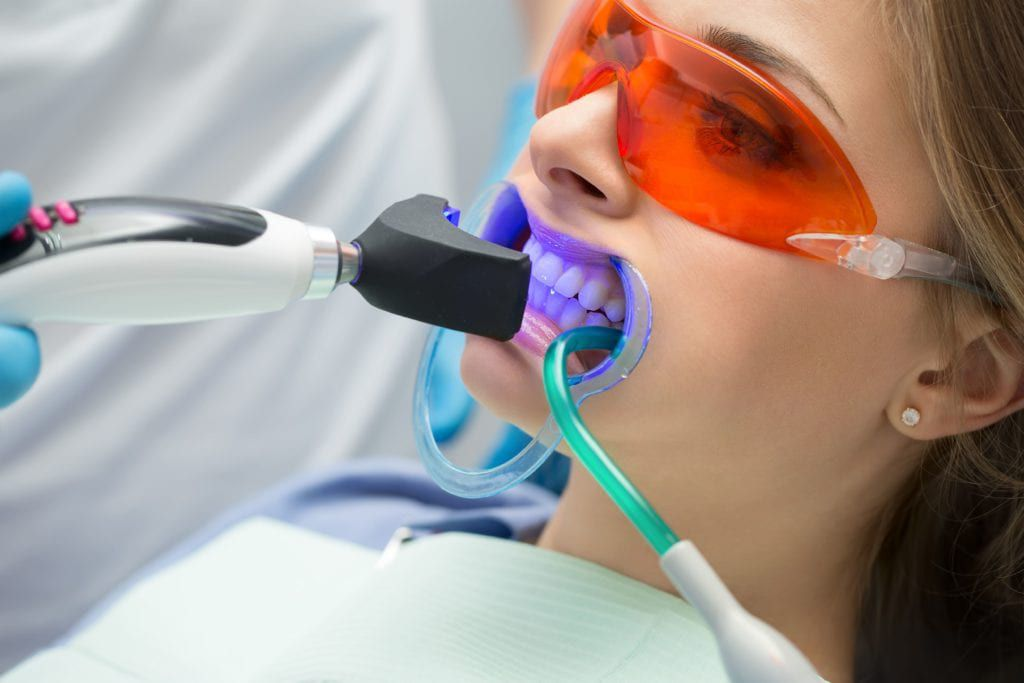
During this procedure a rubber dam is put over the teeth to protect the gums, and a bleaching product is painted onto the teeth. Then a light or laser is shone on the teeth to activate the chemical. The light speeds up the reaction of the whitening product and the colour change can be achieved more quickly.
FAQ
Specialized instruments are used to gently remove plaque and calculus deposits without harming the teeth. The ultrasonic scaler uses vibrations to loosen hardened tartar that sticks to the teeth/in between teeth.
Polishing is usually carried out after scaling to further remove stains and make the teeth feel smooth and shiny. It’s done with a soft rubber cup that spins. Prophylaxis paste – a special toothpaste-like material is scooped up into the cup and spun around on the teeth.
Most people find that cleanings are painless, and find the sensations described above do not cause discomfort. Most patients enjoy cleanings because of the smooth feel of their teeth afterwards. Some patients report sensitivity for one to two weeks after cleaning. But that resolves on its own and doesn't occur with every case.
Teeth can become more yellow with age and with the continuous consumption of dark staining foods like coffee, tea, red wine or tobacco.
Teeth whitening is a cosmetic dental procedure that lightens pigmentation within the teeth. Scaling and polishing is a procedure that removes dental plaque, tartar and extrinsic stains that are present on the outer surface of the teeth.
Scaling and polishing cleans your teeth, preventing and controlling the severity of gum diseases. After scaling & polishing, teeth can appear lighter if there are many stains on the outer surface of the teeth. If the intrinsic colour of teeth is very yellow, there will be no changes after teeth cleaning as the yellow colour comes from inside the tooth. In that case, tooth whitening is advised.